Four free programmes — each designed to meet you where you are, whether that's a scheduled coaching call, an open drop-in, a self-management pack, or a peer circle.
Juno's work begins the moment someone is referred — whether by their GP practice, by NHS Grampian's long-term conditions nursing team, by a social worker, or because a neighbour passed them one of our leaflets from Fraserburgh Library or the Saltoun Square community noticeboard.
A health coach calls within five working days for an unhurried welcome conversation: we listen to what the person finds hardest about managing their condition, what their day looks like, what they have already tried, and what they most want from our support. From that conversation we agree together on a support plan — how often to be in touch, which programme or combination of programmes suits them best, whether they want to be connected to a peer group, and what their self-management goals look like over the next three months.
No two participants' journeys are the same. We never discharge someone for not engaging often enough — life with a long-term condition is not linear, and Juno is here for the harder stretches as well as the steadier ones.
All Juno programmes are free to Fraserburgh and Buchan residents. Most can be accessed by phone alone — we will never let connectivity be a barrier.
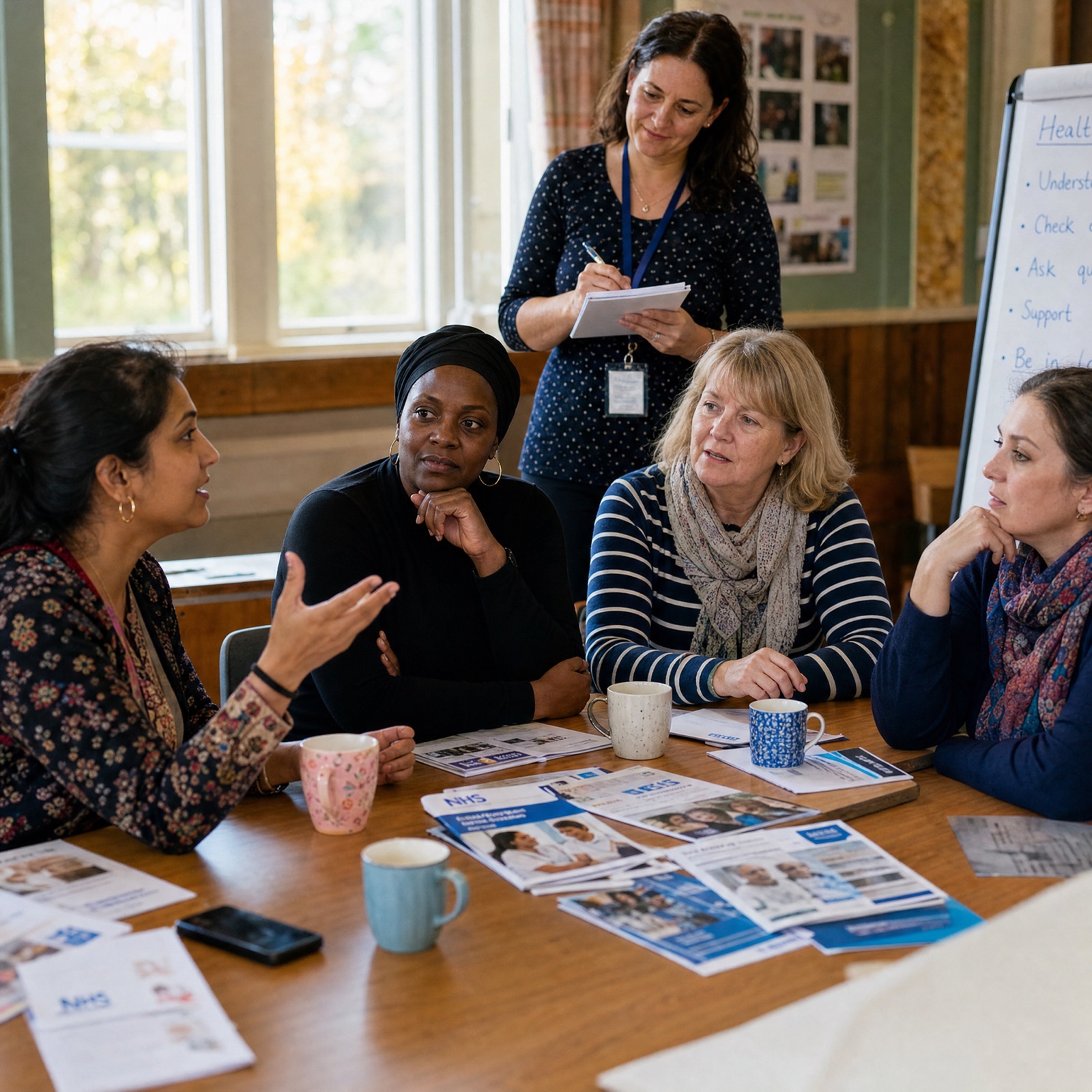
Structured telephone and video check-ins with a named health coach, tailored to your condition and your schedule.
Juno Connected is our flagship programme: a regular, scheduled call or video session with one of our trained health coaches, lasting around 30 to 45 minutes. Coaches use accredited self-management frameworks to help participants track symptoms, review their care plan goals, and troubleshoot day-to-day challenges — from understanding a new prescription to managing a flare-up over a bank holiday weekend.
Participants are assigned the same coach from their very first session, building a consistent, trusting relationship over months or years that makes genuinely honest health conversations possible.
Weekly open online drop-in sessions where anyone can bring questions about managing their long-term condition, no appointment needed.
Every Wednesday and Friday morning we host a Zoom-based open surgery for any Fraserburgh and Buchan resident managing a long-term condition. Participants join a waiting room, see a health coach for up to 20 minutes, and leave with practical answers and, where appropriate, a written summary of the guidance discussed.
Topics raised range widely, from blood glucose monitoring techniques to breathing exercises for COPD to navigating the NHS Scotland patient portal. A phone-only dial-in option is always available for those without reliable internet access, because we will not let connectivity be a barrier to participation.
Personalised condition-specific self-management packs, available digitally or posted directly to your door.
Condition Compass produces clear, jargon-free self-management guides for the twelve most common long-term conditions seen across our participant group, covering type 2 diabetes, COPD, hypertension, heart failure, chronic kidney disease, osteoarthritis, rheumatoid arthritis, fibromyalgia, chronic pain, anxiety, depression, and multiple sclerosis.
Each pack includes a symptom diary, a when-to-seek-help guide, a medication log, and a curated list of trusted online resources. Packs are reviewed annually with clinical input from NHS Grampian's community nursing team and are available to download, receive by post, or have walked through on a welcome call with a health coach.
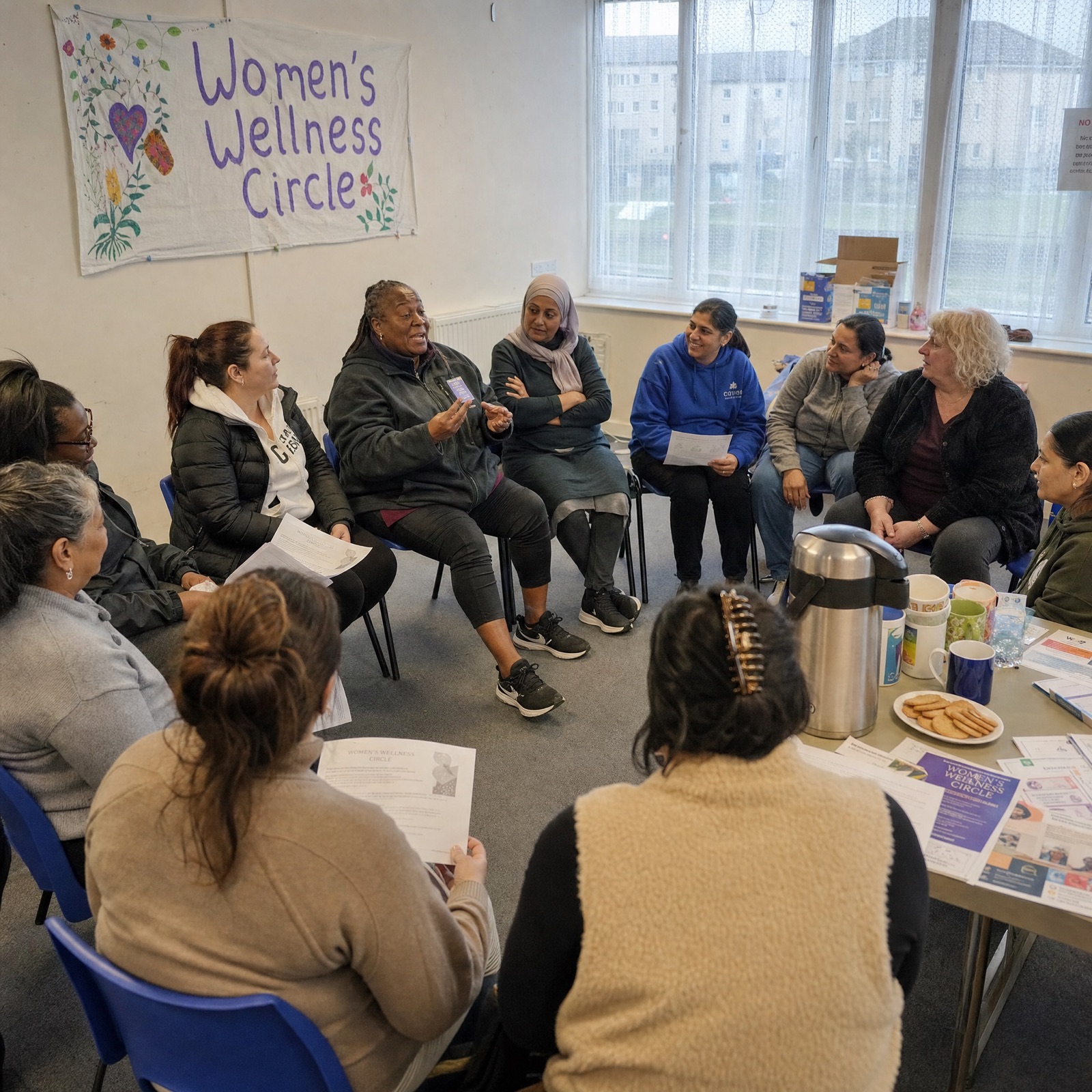
Facilitated online peer support groups connecting Fraserburgh and Buchan residents managing similar long-term conditions.
Peer Circles runs six fortnightly online groups, each focused on a cluster of related conditions: a diabetes group, a respiratory group, a chronic pain and fatigue group, a mental health group, a cardiovascular group, and an open group for people with multiple or less common diagnoses.
Groups are facilitated by a trained Juno peer support worker, many of whom have their own lived experience of the conditions discussed. Sessions run for 60 minutes and are deliberately informal — part information sharing, part practical problem-solving, part mutual encouragement. A phone-in bridge line ensures no participant is excluded by digital access or equipment.
We keep detailed, confidential records of every interaction and share relevant information with a participant's GP only with their explicit consent. Our own data shows that after six months with Juno, over 70 per cent of participants report feeling significantly more confident managing their condition at home.
We consistently see reduced out-of-hours GP calls from within our participant group — evidence that informed, well-supported people make better decisions about when and how to seek urgent clinical help.
Some people want a single monthly check-in to stay on track; others need more intensive contact during a difficult period and can step back as their confidence grows. We respect that, and we never discharge someone for not engaging often enough — life with a long-term condition is not linear, and Juno is here for the harder stretches as well as the steadier ones.